API 580 Course — Risk-Based Inspection (RBI) Training per API RP 580/581
The training course is designed to teach how to identify risks and hazardous impacts, as well as conduct their assessment and ranking, detect dangers and problems in equipment performance that may arise during facility operation. You will learn to effectively find mitigation measures and provide recommendations.
Management System
ISO 9001:2015
ID 9000012276
www.tuv.com
Risk-based inspection according to API 580 / API 581 (American Petroleum Institute API) is a process of controlling main technological equipment with proper understanding by technical supervision inspectors of modern knowledge and skills in risk-based inspection, as well as detailed understanding of calculations performed according to API 581 data for pressure equipment.
Implementation of risk-based inspection in the oil refining industry provides advantages in ensuring safety and economic feasibility.
API 580, API 581 Training Course Objectives
- Obtaining basic knowledge about the process of controlling main technological equipment in the oil refining industry based on risk-based inspection (API 580 /API 581).
- Detailed understanding of calculations is carried out in accordance with API 581 for pressure equipment.
- In-depth understanding of qualitative and quantitative approaches within inspection planning and analysis of initial data for equipment condition assessment.
- Understanding approaches that allow interpreting, understanding and managing wear processes in connection with studying various damage mechanisms that will help in determining the correct control and inspection method.
- Identifying damage mechanisms and correct interpretation of key elements in implementing control according to API standards (API 510, API 570, API 653) and related risk-based inspection (RBI) procedures in accordance with API 580 and API 581.
- Obtaining information about basic chemical-technological methods of corrosion protection at oil refineries.
API 580, API 581 Course Program
(included in the program: Shell DEP 39.01.10.11, Shell Degradation Library OG.03.20735, NACE)
Module 1
- Course objectives and overview.
- Basic principles of RBI.
- Why risk-based inspection is necessary.
- Failure videos.
- Recent failures.
- Development of risk-based inspection.
- Traditional approach and standards.
Module 2
- Adoption of RBI standards worldwide.
Module 3
- RBI advantages.
- RBI limitations.
Module 4
- Definition of RBI term.
- Types of risk-based inspections.
- API.
- Shell company risk-based inspection (S-RBI).
- Premalux methodology.
- API-based risk-based inspection methodology.
- API RP 580.
- API BRD 581 – Various levels of results analysis.
Module 5
- Probability theory.
- Review of standards regulating remaining life calculation and inspection intervals.
- Analysis of inspection intervals according to S-RBI.
- Review of API 581 for determining inspection dates.
- Development of basic stages for failure probability calculation.
Module 6
- Consequence theory.
- Leak rate.
- Health consequences.
- Environmental consequences.
- Production losses.
- Reputation.
Module 7 Phased Array Testing
- Understanding damage mechanisms.
- What is corrosion.
- Overview of damage mechanisms found at oil and gas facilities: discussion of some common damage mechanisms according to API 581: internal and external corrosion, brittle fracture, fatigue, stress corrosion cracking, hydrogen environment cracking.
- Non-destructive Testing.
- Various non-destructive testing methods for various defects.
Module 8
- Understanding production processes.
- Development of corrosion cycle, taking into account: process conditions and material structure.
- Potential damage mechanisms.
Module 9
- Data organization.
- Understanding approaches to data organization within the model.
- Understanding detailed process flow diagrams and distribution systems.
Module 10
- RBI implementation.
- Failure probability analysis.
- Failure consequence analysis.
- Understanding mechanisms for slowing corrosion degradation of materials.
- Exercises.
- Software product demonstration.
Module 11
- RBI maintenance.
- RB inspection planning dates.
- Understanding the difference in rates of various types of corrosion and how this affects risk in RBI.
- Short-term and long-term asset integrity management.
- RBI inspection data management system.
- Development of inspection plan.
- Monitoring of inspection plan.
- Storage of inspection data.
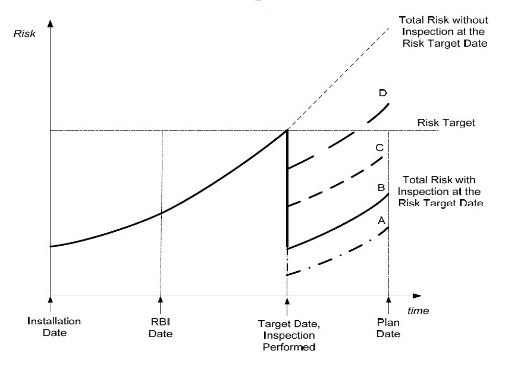
Fig.1 Controlled hazard level under RBI
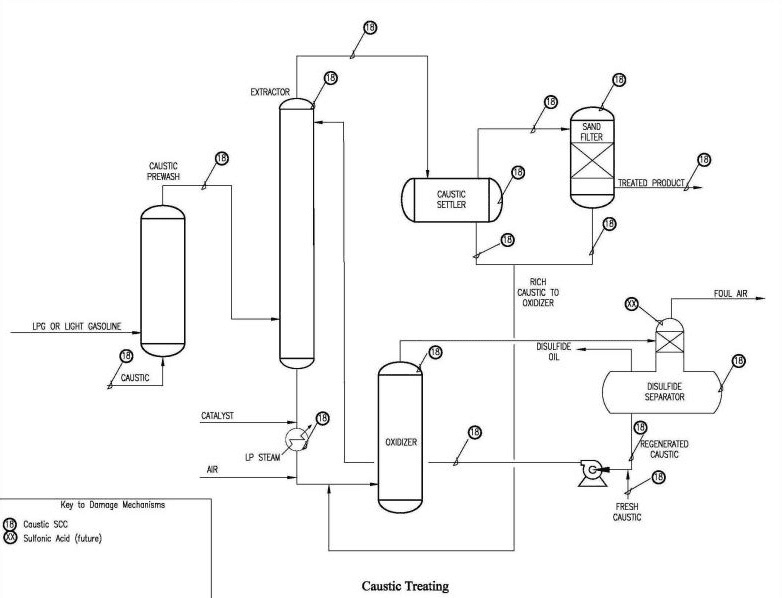
Fig.2 Typical unit for investigation
Services within API 580, API 581:
- We offer conducting Risk Based Inspection (RBI) and API 571 "Damage Mechanisms and Damage Investigation".
- We apply modern non-destructive testing tools used in technical diagnostics of equipment (TOFD (Time of Flight Diffraction), PA (Phased Arrays), PEC (Pulsed Eddy Current) and others).
- We offer training seminars on conducting comprehensive technical inspection of technological equipment using risk-oriented approach at oil refineries based on API 580/581 standards. The process of conducting Risk Based Inspection (RBI) and API 571.