Experience of RBI application for acid gas removal unit
Installation Description
Plant management decided to implement a risk-based approach to equipment inspection after 30 years since plant startup. The uniqueness of the acid gas removal unit (Figure 1) lies in the fact that three process lines were built at different times and differ in design. The amine regeneration column of the 1st process line is made entirely of carbon steel, the 2nd column is partially covered with austenitic stainless steel 316 cladding on the inner surface, and the 3rd process line column is completely covered with cladding material.
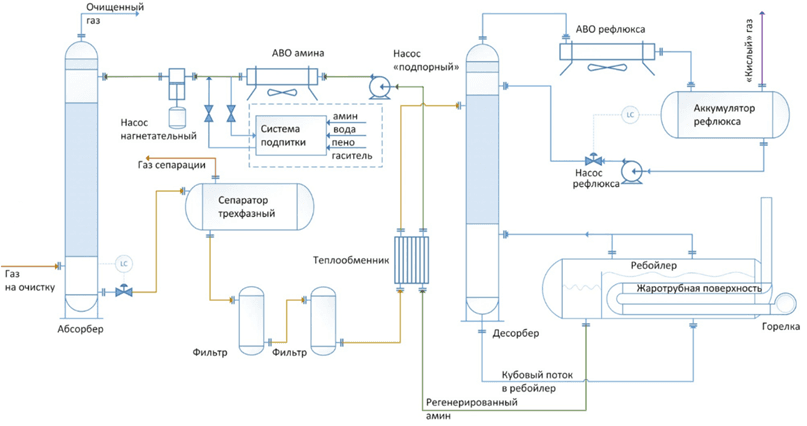
Figure 1 – Acid gas removal unit scheme.
Prior to RBI implementation, inspection was carried out according to inspection regulatory procedures (IRP) - a methodology similar to RTN, based on fixed inspection intervals and prescribed inspection methods.
Stage 1. Primary Analysis
During primary RBI analysis, failure mechanisms were identified, their consequences and probabilities were assessed, and an inspection plan was developed. The most effective modern non-destructive testing methods were selected for the most probable failure mechanisms.
During the primary inspection, the following was identified:
- Process line 1: hydrogen flakes in the upper part of the column.
- Process line 2: galvanic corrosion (GC) in the carbon steel-stainless steel 316 transition area.
- Process line 3: salt deposits at the bottom of the column with high chloride ion content.
Since the risk level for all three cases was above acceptable, it was recommended not only to conduct inspections using modern equipment, but also to implement mitigating measures such as:
- development of OOC (identification of significant parameters affecting degradation rate) and their limits;
- implementation of sampling program;
- design changes (installation of sacrificial carbon steel belt covering the carbon steel-stainless steel contact zone, as well as installation of deposit washing from the column bottom).
An analysis of column operating costs was conducted. The inspection regulatory procedure (IRP) approach was adopted as the baseline, where control methods are predetermined and inspection intervals are fixed.
During RBI analysis, it was found that continuing to use the IRP approach poses extremely high column failure risk due to hydrogen embrittlement and subsequent cracking through vessel wall thickness on the 1st process line. On the second process line, galvanic corrosion development will lead to column wall thickness loss. On the 3rd process line, high chloride ion content in deposits at the column bottom will lead to chloride stress corrosion cracking of stainless steel.
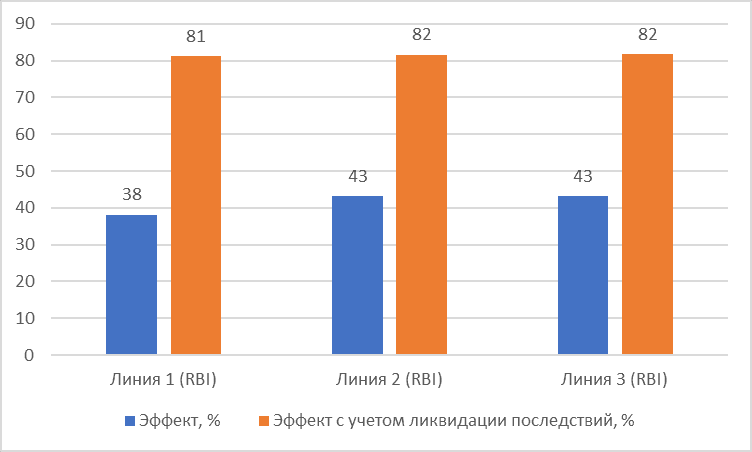
Figure 2 – Effect of RBI implementation for amine regeneration column without (blue) and with consideration of consequence mitigation for baseline (IRP) for 3 process lines (orange).
Stage 2. Economic Calculation
Economic calculation was performed for IRP and RBI approaches for the subsequent operating period of 30 years.
Application of RBI and mitigating measures will allow increasing the interval between planned shutdowns from 5 years to 7, and will also allow equipment operation with design changes to the column structure.
As a result of the assessment, the RBI approach will reduce costs by 38-43% compared to operation under inspection regulatory procedures. Since the depressurization risk is high when using IRP, the effect of RBI implementation was also calculated considering consequence mitigation (Figure 2).
For other unit components with low risk levels, inspection prioritization and reduction of mitigating measures were performed. The risk matrix at the time of analysis (left) and after conducting recommended RBI inspections (right) is presented in Figure 3.
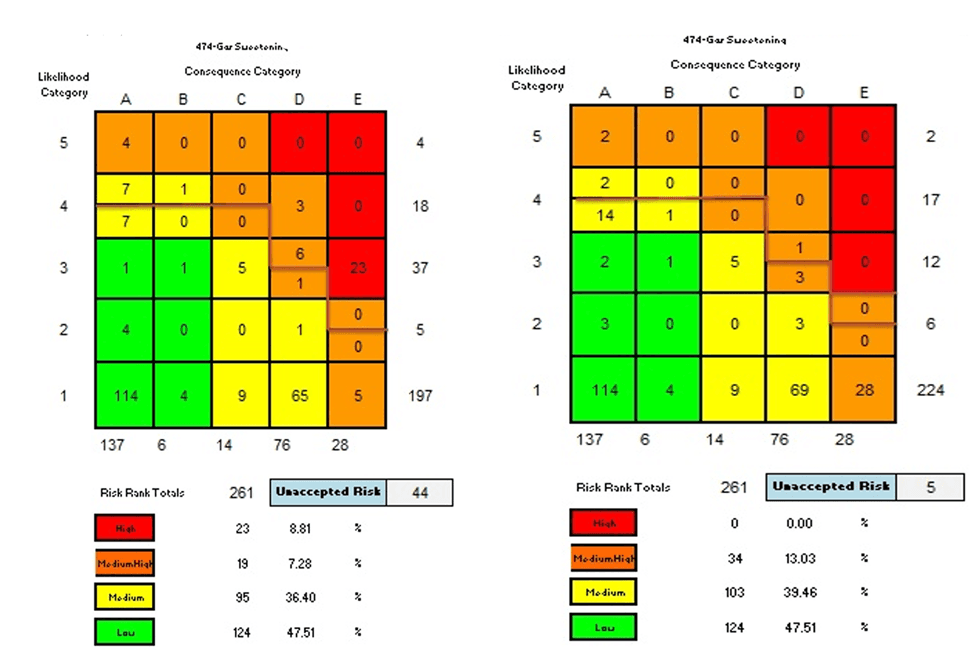
Figure 3 – Risk matrix of acid gas removal unit at the time of analysis and after conducting recommended RBI inspections.
Result
As a result, 23 components that were in the high-risk category moved to medium-high and medium risk categories. Of 44 components that were in the unacceptable risk category, only 5 components requiring special measures remained.
Application of the risk-based approach to static equipment inspection revealed the inefficiency of classical methods and non-destructive testing programs. Primary inspection confirmed the correct selection of degradation mechanisms during RBI analysis, namely the presence of hydrogen flakes on the 1st process line, galvanic corrosion on the 2nd line, and high chloride ion concentration on the 3rd line.
Risk analysis allowed redistribution of funds and resources for unit equipment inspection, reducing expenses for low-risk components and increasing them for high-risk components. RBI implementation enabled creation of a mitigating measures plan, equipment modifications, and an effective inspection program. For the amine regeneration column, the economic effect of applying the risk-based approach was at least 38% while reducing the risk level to an acceptable level.