Certification
Not all products must have CE marking. This is only mandatory for most products that fall under the New Approach Directives. It is prohibited to apply CE marking to other products.
Products subject to certification receive a certificate of conformity following successful verification, and the "CE" mark is applied to the product itself. From this moment, the product is permitted to be placed on the European Single Market.
Extension: it is necessary to submit an application 30 business days before the certificate expires.
Management System
ISO 9001:2015
ID 9000012276
www.tuv.com
"CE" marking
All products placed on the European market are divided into 2 groups: those requiring "CE" marking and those that do not. Regardless of country of origin, products that require "CE" marking are also conditionally divided into 2 groups:
- those falling under regulations and directives requiring certification through notified bodies;
- those falling under harmonized standards, where the manufacturer chooses the conformity assessment method and submits a declaration.
CE certification is a series of coordinated actions to determine product compliance with legislative requirements of the European Single Market. It should be noted that components with "CE" marking do not automatically allow "CE" marking to be applied to the entire product, therefore: CE + CE ≠ CE.
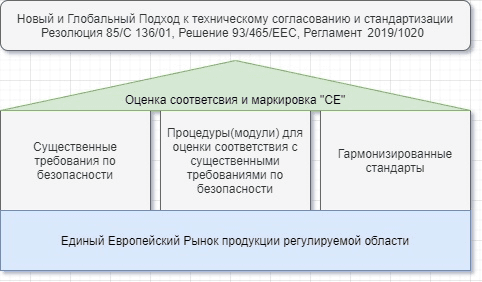
The abbreviation "CE" (Conformité Européenne) means "European conformity." By placing the "CE" mark, manufacturers declare that the product complies with European safety standards. CE marking provides two main advantages for businesses and consumers in the European Economic Area (EEA):
- Companies know that CE-marked goods can be sold in the EEA without restrictions.
- Consumers maintain a uniform level of health, safety, and environmental protection throughout the EEA.
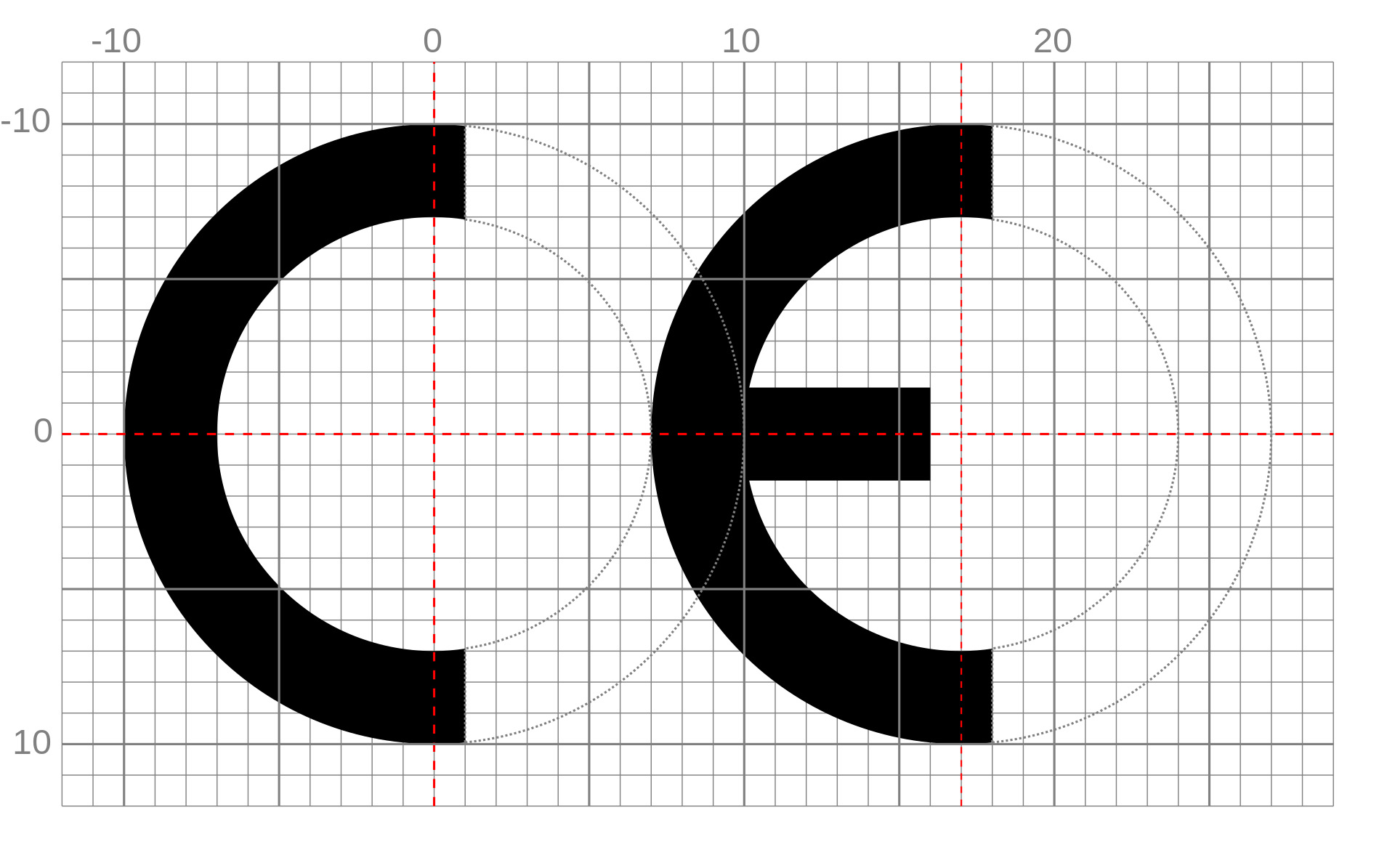
CE mark
In which European countries is "CE" marking used
"CE" marking is used on products sold in the Single Market of the European Economic Area (EEA).
The EEA - created by international agreement, combines the European Union market and the markets of European Free Trade Association (EFTA) countries.
EFTA consists of four European countries: Iceland, Liechtenstein, Norway, and Switzerland. Three EFTA countries (except Switzerland) participate in the European Single Market. Switzerland did not join the EEA but has several bilateral sectoral agreements with the EU that allow it to participate in the internal market.
EEA = EU + EFTA
Responsibility for marking lies with manufacturers, importers, and distributors, regardless of whether the product is manufactured within the European Single Market or elsewhere in the world.
Manufacturer obligations
By placing CE marking on a product, manufacturers declare that the product complies with all legislative requirements and can be placed on the European Economic Area (EEA) Single Market.
Manufacturers play a crucial role in ensuring the safety of products placed on the EEA market. Manufacturers are responsible for verifying compliance of their products, particularly conducting conformity assessment, creating technical files, preparing EU declarations of conformity, and applying CE marking to the product. After these measures, the product can be placed on the EEA market.
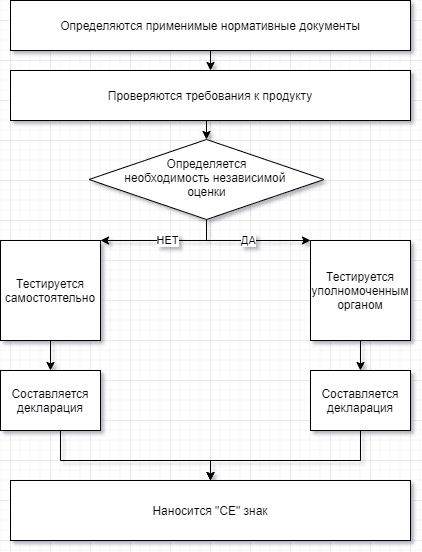
If you are a manufacturer, you need to complete the following 6 steps to obtain the right to place your product on the EEA market:
- Identify applicable directives and harmonized standards.
- Verify product requirements.
- Determine whether independent conformity assessment (by an authorized body) is necessary.
- Test the product and verify its compliance.
- Compile and maintain necessary technical documentation.
- Apply CE marking and prepare an EU Declaration of Conformity - Declaration of Conformity.
Manufacturers apply CE marking only to products falling under one of the directives or standards defined by regulations that require its application.
Products presenting high safety risks are checked not only by the manufacturer. In such cases, product safety verification is conducted by an authority-designated notified body, and conformity marking depends on the results of such verification.
Importers and distributors help ensure that products complying with EU legislation and bearing CE marking are placed on the extended EEA Single Market. Since they are intermediaries between manufacturers and traders, they must have complete understanding of legal requirements and ensure that products they distribute or import comply with them.
Importer obligations
When importing from non-EU countries, importers must ensure that products comply with all EU safety, health, and environmental requirements before placing them on the market. The importer must ensure that:
- The manufacturer has taken necessary actions to determine product compliance before placing it on the EU market.
- Necessary documentation, such as EU Declaration of Conformity and technical documentation, is available upon request.
- Contact with the manufacturer is possible at any time.
Distributor obligations
Distributors must handle products carefully, maintaining product characteristics in accordance with EU legislative requirements. Distributors must know which products should have CE marking and accompanying documentation. Distributors must be able to identify non-compliant products.
Distributors must be able to demonstrate to national authorities:
- Confirmation from the manufacturer or importer that necessary product conformity assessment measures have been conducted.
- Readiness to assist national authorities in their efforts to obtain necessary documentation.
If importers or distributors sell products under their own name, they assume manufacturer responsibility. In this case, they must have sufficient information about product design and manufacturing, as they assume legal responsibility for CE marking application.
"CE" certification services
RBI Concept – official representative of Notified Body "Tüv Rheinland" offers "CE" certification services according to requirements of the following Regulations and Directives:
- Regulation (EU) 305/2011 (CPR) - "Construction Products Regulation".
- Directive 2014/68/EU (PED) - "Pressure Equipment Directive".
- Directive 2014/35/EU - "Low Voltage Directive".
- Directive 2014/30/EU - "Electromagnetic Compatibility".
- Directive 2006/42/EC - "Machinery Directive".
Specifically: consulting, conformity assessment, test preparation and conduct, documentation preparation and translation, declaration preparation, and other services within the scope of support.